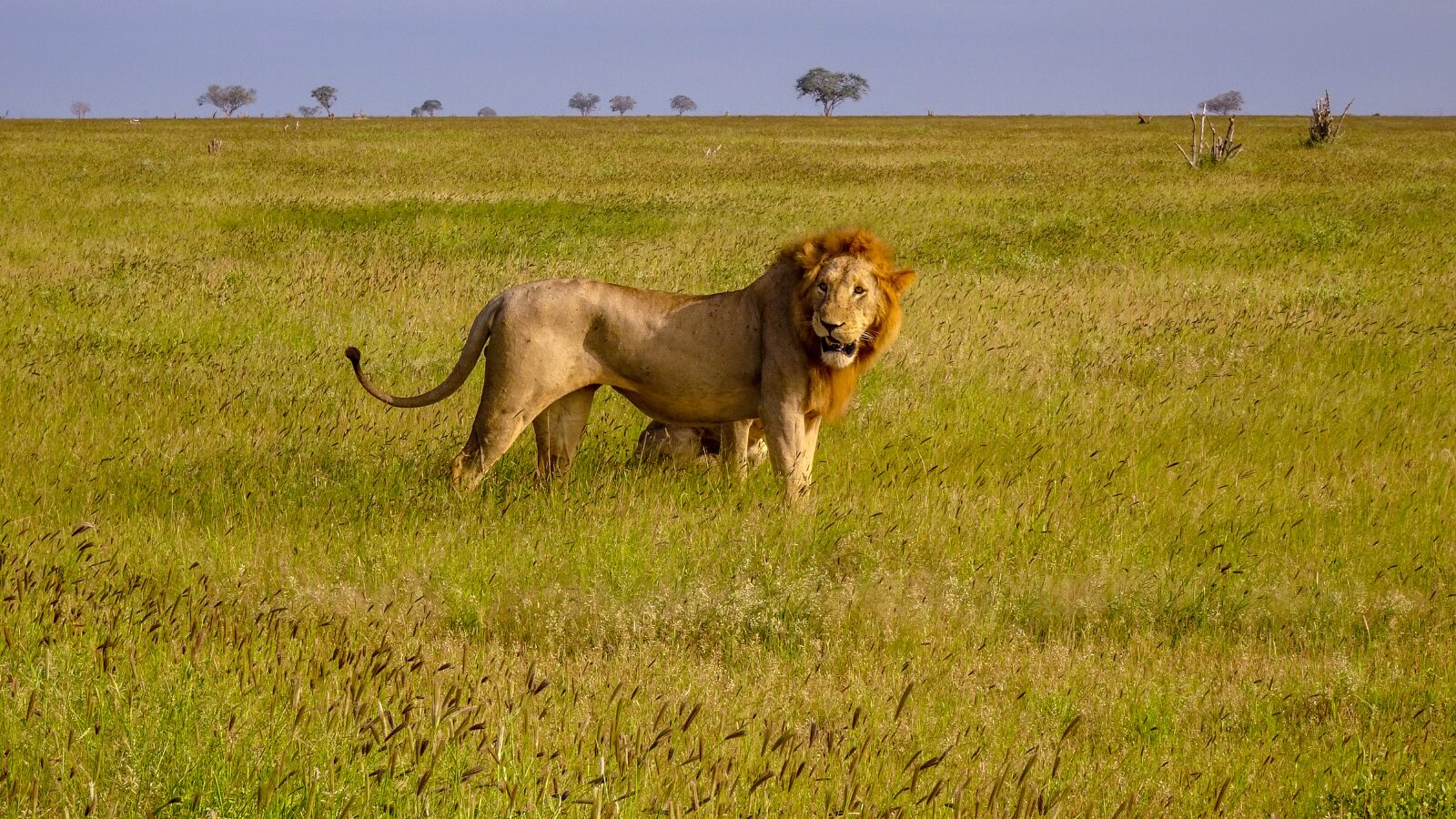

4 days / 3 nights
Mufasa Tour — Kenya
A four-day safari built around the Great Migration, the greatest gathering of wildlife on the planet.
Day 1
NAIROBI / MASAI MARA
Departure from Nairobi towards Masai Mara. During the journey, we will cross the splendid landscapes of the Great Rift Valley where we will make a short stop to admire and photograph the suggestive panorama. Arrival at Mara Gate and after completing the entry formalities, we will begin our first game drive towards the tented camp or lodge in search of the big cats, which are very numerous in the park. The Masai Mara Reserve is probably the most famous and most visited reserve in Kenya.
It offers breathtaking spectacles as well as an extraordinary density of animals, including the “Big Five” and a remarkable variety of fauna and flora: the immense plain, the rounded hills, the rainforests and acacia woods. The predominant characteristic is the annual migration of wildebeest, zebras and gazelles which, from the Serengeti plain in Tanzania, cross the border into Kenya and the eponymous river, reaching the grasslands of Masai Mara.
The migration begins towards the end of June and is followed by large predators (for them, a period of intense hunting activity begins): lions, leopards, cheetahs, and hyenas while vultures and other raptors circle in the sky. Apart from the seasonal migration, wildlife is abundant all year round: elephants, black rhinos, buffaloes, hippos, crocodiles, zebras, and felines. Arrival at the camp, check-in, lunch, and relaxation. Departure for another game drive until sunset in search of elephants, lions, cheetahs, buffaloes, and other typical savannah animals. Return to camp for dinner and overnight stay.
Day 2:
MASAI MARA
Full day to explore the vast plains of Masai Mara, starting before breakfast with an early morning game drive at dawn, the best time to capture animals looking for their meal.
After this first game drive of the day, return to camp, breakfast, and then depart again for another game drive with our packed lunch (prepared by our tented camp) until lunchtime. This time we will dedicate ourselves entirely to the spectacle of the great wildebeest migration; the migrating herds (zebras, wildebeest, elands, Thomson and gazelles) that participate in the wildebeest migration are present in the Mara plains from mid-July to mid-October, as are elephants, lions, buffaloes, cheetahs, giraffes, rhinos, and many others. We will reach the banks of the Mara River, a migration point, where the complicated and dramatic river crossing takes place, but it is also the point to spot crocodiles and hippos.
At lunchtime, your driver will find a quiet spot under the shade of an acacia to have lunch and where you can admire the surrounding landscape. After lunch and rest, we will depart again for another afternoon game drive in search of felines until sunset, or, if you wish, you can visit a traditional Maasai village, take a look at their homes and lifestyle. Let yourself be welcomed by the songs and dances of the locals, a sacred ritual that is part of their rich tradition. Return to the tented camp for dinner and overnight stay.
Day 3:
MASAI MARA – LAKE NAKURU
Wake up, breakfast, check-out and departure towards Lake Nakuru, a perfect oasis for a different safari. Lake Nakuru National Park was founded in 1961 and is known as a sanctuary for waterbirds. The lake, famous for being the place to witness the greatest bird show in the world, as it abounds in algae, attracts and feeds millions of pink flamingos.
Due to the color of their plumage, flamingos give Lake Nakuru a suggestive, uniform and unique pink color in the world. In addition to flamingos, the lake attracts over 450 other bird species: Egyptian geese, kingfishers, fish eagles, herons, the endemic secretary bird and countless white pelicans crowd the lake shore. Plus there are Marabou storks. The park is home to a good number of easily visible mammals, such as hippos which can be seen snorting and splashing at various points around the lake during the day, impalas, lions, leopards, buffaloes and warthogs.
The lake also has a reputation for being an important refuge for endangered species, particularly the Rothschild giraffe and black and white rhinos, so much so that the Park today is an important “rhino sanctuary” in Kenya. Arrival at the lodge, check-in, buffet lunch and relaxation. After a rest, we will depart for another game drive until sunset to see as many animals as possible. Return to the lodge for dinner and overnight stay.
Day 4:
MASAI MARA / NAIROBI
Wake up, breakfast, check-out and last game drive towards the park exit. During the journey to Nairobi, we will make a small stop at Lake Naivasha where a boat trip awaits you. Lake Naivasha is a freshwater lake of volcanic origin, populated by many hippos and birds. Arrival in Nairobi.
It is located approximately 90 kilometers northwest of Nairobi and is the second largest freshwater lake in Kenya, after Lake Victoria. It is located at an altitude of approximately 1,890 meters above sea level.
Lake Naivasha is of tectonic origin, resulting from volcanic activity in the Rift Valley, and is surrounded by a variety of ecosystems, including wetlands, open waters, and agricultural land. Precisely for this reason, the area is rich in biodiversity, with numerous species of birds, such as pelicans, herons, vultures and eagles.
The lake waters are inhabited by fish such as the Nile perch and catfish.